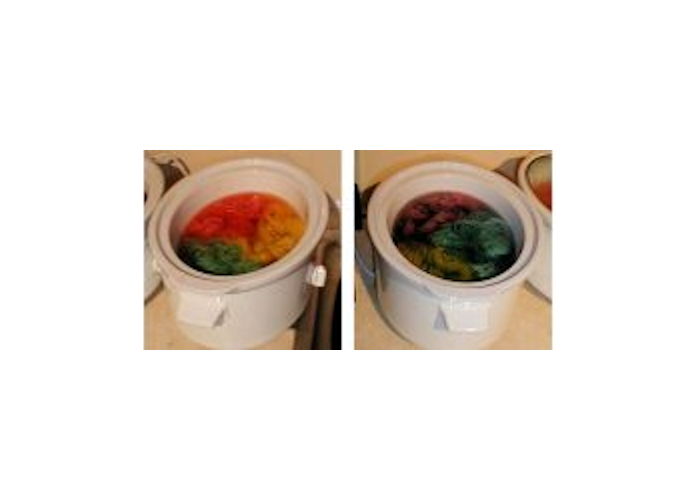
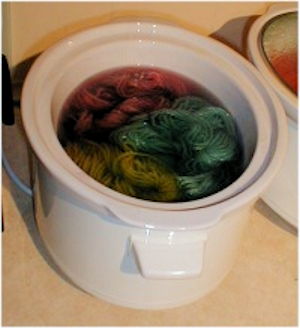
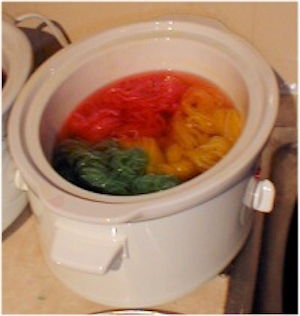
Since I am now living in a small flat in London, I have had to change my dye methods to working in a small space. I purchased a couple of crockpots (slow cookers) and these seem to be working quite well. A 3.5 litre crockpot is large enough to dye about 100 – 150 grams of yarn at a time (about 4-6 oz) .
The slow cookers that I purchased are oval in shape and quite shallow. If I had my preference, I would have liked to buy a slightly larger size and possibly a round shape (hoping that the round ones would be deeper, to make it easier to dip dye the yarn)
Also, the magenta or red colour dyes require a higher heat than the cyan or yellow, to absorb properly into the yarn. Crock pots don’t always give a very good high heat, so it is best to heat the water on the stove. The slow cookers that I bought are not able to be used on the stove as well, so I have to use a regular cooking pot for the magenta dyebath.
Basic Steps for Crockpot Dyeing
– Using 3 Prime Colours (cyan, yellow, magenta)
(I use CIBA Acid Dyes) and 2 Crockpots and one regular stove pot – 1 Crockpot for Cyan, 1 for Yellow and Magenta in the stove pot.
Fill the Slow Cookers with Hot Water
Turn the Slow Cookers onto the Hot setting
Add a Tablespoon of Vinegar
Add Dye to the Slow Cooker
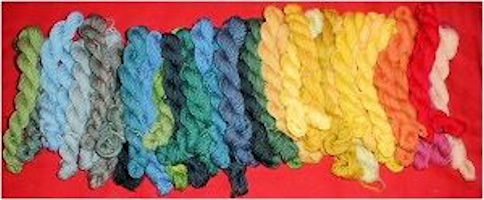
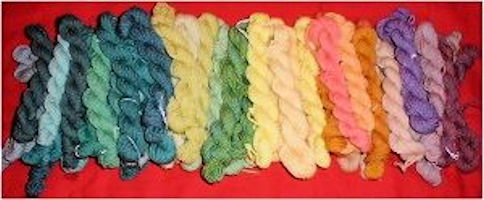
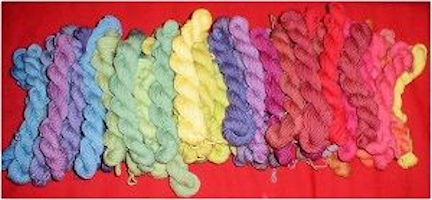
If you have a pH tester, the dye bath should be acidic – the pH should be <4 Wind the yarn into dye skeins and tie loosely in several places, so that the skeins don’t tangle once they are in the dyepot. I wound skeins of approx. 25 grams each. Rinse the skeins in hot water and make sure they are thoroughly wet, or the dye will be uneven. Place the wet skeins into the dyepots and let them sit for about 20 minutes to absorb the dye. Stir the dyepots frequently in order to get even colour distribution. To get additional colours, remove 2 dye skeins from the cyan dyepot and place 1 in the yellow dyepot and 1 into the magenta. Similarly, remove 2 from the yellow and place them into the cyan and magenta. And remove 2 from the magenta and place them into the cyan and yellow. Let the skeins sit in the dyepots for about another 10-20 minutes. You can continue to move skeins from one dyepot to another to get different colours, until all the dye has been exhausted from the dyepot – The water will be clear.
More About Dyes
Kool-aid Colors
Dye Information
Natural Dyes
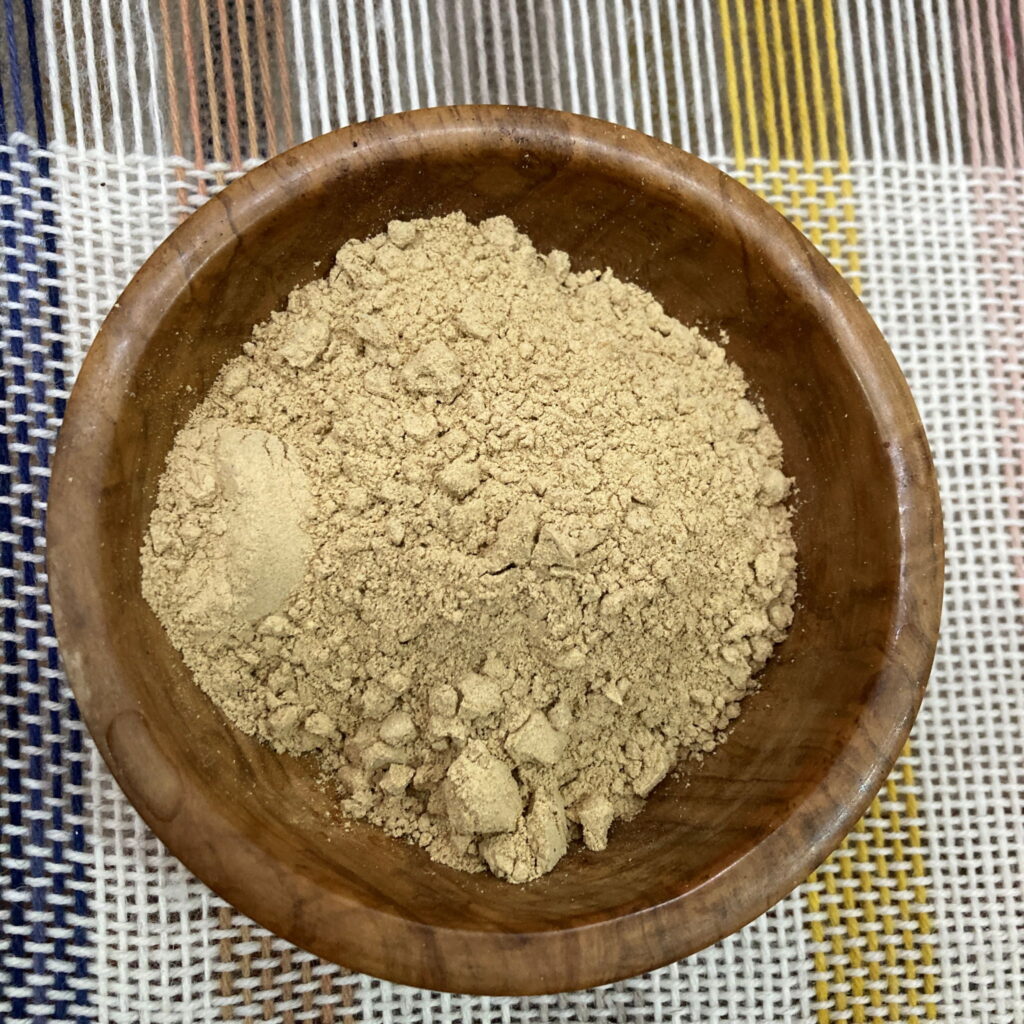
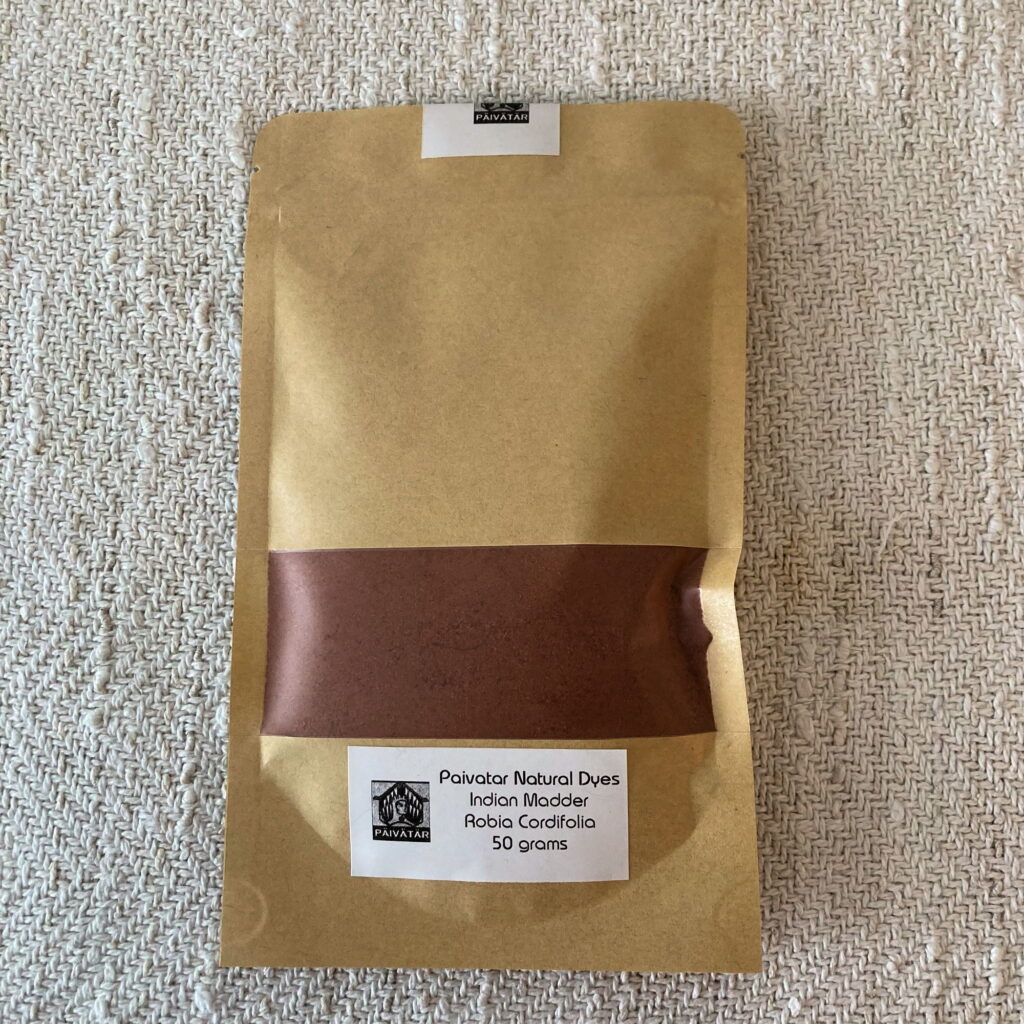
Shop for Natural Dyes at Paivatar.com
Books – Dyes and Colour
Yarn Works: How to Spin, Dye, and Knit Your Own Yarn
Tie-Dye: Dye It, Wear It, Share It
Prepared to Dye: Dyeing Techniques for Fiber Artists
 LONGTHREAD MEDIA VIDEO
 LONGTHREAD MEDIA SUBSCRIPTIONS
HANDWOVEN MAGAZINE
PIECEWORK MAGAZINE
SPINOFF MAGAZINE
LEARN LONGTHREAD MEDIA
PAIVATAR HANDMADE
LONGTHREAD MEDIA SUBSCRIPTIONS
HANDWOVEN MAGAZINE
PIECEWORK MAGAZINE
SPINOFF MAGAZINE
LEARN LONGTHREAD MEDIA
PAIVATAR HANDMADE
 Paivatar on YouTube
Visit my YouTube channel for how-to craft videos.
Paivatar on YouTube
Visit my YouTube channel for how-to craft videos.
Or Please visit my Channel on Rumble for more how-to videos.
https://rumble.com/Paivatar
LIVE STREAMS - Paivatar Studio
KICK
TWITCH MAKERS&CRAFTING
YOUTUBE